Fire and rescue services
Call 119.
Medical emergencies
Call 120.
Police
Call 110.

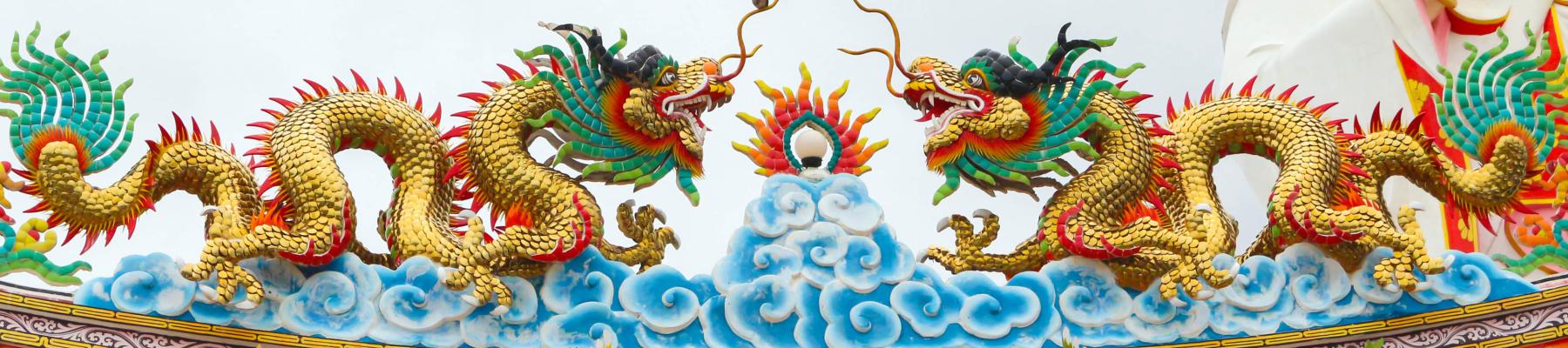
Exercise a high degree of caution in China overall.
Reconsider your need to travel to Gyirong County, in Tibet, China, due to the ongoing risk of severe flooding and landslides.
Exercise a high degree of caution in Tibet and Xinjiang.
Exercise a high degree of caution in Tibet and Xinjiang due to the security situation and associated measures.
Full travel advice: Safety
Full travel advice: Health
Full travel advice: Local laws
Full travel advice: Travel
Full travel advice: Local contacts
Petty crime occurs, including:
If you resist, you can be injured if criminals turn violent.
Criminals target travellers in crowded areas, including on transport.
People have reported assaults and robberies, particularly in areas popular with expats. This includes bar and shopping precincts in major cities.
There are scams that target travellers.
Scammers invite travellers for a massage, teahouse service, or nearby cafes and bars. They offer various reasons and may say they wish 'to practise their English'.
Afterwards, they present travellers with an inflated bill. They won't let the traveller leave until they pay the bill by credit card.
Scammers have impersonated trusted phone numbers, including those of the Australian Embassy and consulates. Never share personal information unless you are certain of the caller’s identity. If you're unsure, hang up. Contact the organisation to check if calls are genuine before sharing personal details. Do not click on links in text messages or emails from unknown or suspicious sources.
Sometimes travellers are asked to carry concealed drugs out of China.
Never carry parcels or luggage for others.
Always pack your own bags.
ATM scams occur.
Only use ATMs inside a secure place such as a bank or shopping centre. Do this during daylight hours.
If you're the victim of a crime or scam, report it to the nearest police station immediately.
Always obtain a police report when reporting a crime.
Armed bandit attacks are a risk in remote areas bordering:
Be careful if travelling in these areas.
Kidnapping can happen anywhere, even in places that seem safe.
The Australian Government’s longstanding policy is that it doesn’t make payments or concessions to kidnappers.
More information, including advice on how to reduce your risk of kidnapping:
Public protests and events that draw large groups of people can turn violent.
The Chinese Government prohibits demonstrations they haven't approved. Authorities may arrest protesters.
Avoid protests, demonstrations and large gatherings.
Don't photograph, film or participate in protests or other acts that authorities may consider provocative.
More information:
Increased security measures are in place in Xinjiang.
People of Uyghur descent are particularly affected.
Security checks in major cities in Xinjiang are common. Be ready to show photo ID if asked.
Violent incidents causing deaths and injuries have occurred across Xinjiang.
The government may restrict movement and communications in Xinjiang with little warning.
In the past, protests have turned violent, and people have been killed or injured.
If you're travelling to Tibet, get permission from Chinese authorities first.
You must also apply for a Tibet Entry Permit from the Tibet Tourism Bureau.
You can only lodge applications for Tibet Entry Permits through specialised travel agents in China.
You can only travel as part of an organised tour.
Our ability to provide you with consular services in Tibet may be limited.
See Travel.
Terrorism is a threat worldwide. Terrorist attacks could occur anywhere and at any time. Be alert to possible threats, especially in public places.
Attacks could be targeted or random. They may include places travellers and expats visit.
In recent years, terrorist and other violent attacks have caused injuries and deaths in public places. Targets include railway stations and markets.
You could become the victim of violence directed at others.
If there’s a terrorist incident, leave the area if it’s safe to do so and follow the instructions of local authorities.
More information:
China experiences natural disasters and severe weather, including:
Local authorities send weather and disaster alerts in Chinese-language text messages. Most modern phones have built-in translation features. Read the messages you receive.
Typhoons can happen along the southern and eastern coasts between May and November.
The direction and strength of typhoons can change with little warning.
If there's a typhoon:
If a typhoon is approaching:
If you plan to travel, contact your airline for the latest flight information.
More information:
China can experience earthquakes and large, destructive tsunamis.
If there's an earthquake or tsunami:
Check with the Tsunami Warning Centre for updates on seismic activity and tsunamis.
If you're near the coast, move to high ground straight away if advised, or if you:
Don't wait for official warnings such as alarms or sirens. Once on high ground, monitor local media.
Consult your travel doctor on vaccine requirements before you travel and make sure your vaccines are up to date.
Depending on your location, tap water in China may not be safe to drink.
Drink only bottled water with sealed lids.
People have died from avian influenza in China. Avian influenza virus strains continue to circulate in poultry in China.
The primary source of infection seems to be poultry handled in poultry markets.
To protect yourself from avian influenza:
When preparing food, handle poultry properly. Thoroughly cook all parts of the poultry.
More information:
Insect-borne illnesses occur, including:
To protect yourself from disease:
Animal and human rabies are common. Health authorities report many cases each year.
Be careful with both wild and domestic animals in China.
If you're bitten or scratched by an animal, get medical help immediately.
Outbreaks of other infectious diseases may occur, these include:
To protect yourself from illness:
More information:
High pollution levels are a problem.
Children, the elderly and those with pre-existing heart and lung conditions may be especially affected by pollution.
Authorities issue red alerts when pollution is expected to be especially bad.
When a red alert is in place, authorities:
Dust storms occur across the north of China. They can:
Get medical advice if you're worried about air pollution.
Follow the advice from local authorities about days with bad pollution and how to reduce your exposure.
More information:
Parts of China are at altitudes of over 3,000 metres, including:
If you travel to those areas, you may get altitude sickness.
People with lung, heart or chest problems should take extra care. Even if you're healthy, you can still be affected.
Symptoms of altitude sickness include:
In severe cases, fluid can build up in your lungs, brain or both, which can be fatal.
To protect yourself from altitude sickness:
If you're affected by severe altitude sickness, get to lower ground as soon as possible.
There’s no agreement between Australia and China for free healthcare. Tourists must pay for all medical care, even if they need to stay in hospital or be evacuated. This can be very expensive. Make sure your travel insurance covers you. The Australian Government won't pay for these costs.
International standard medical services in China are expensive.
If you plan on staying in China for a while:
Some hospitals in major cities have special departments for treating foreigners.
However, the standard of medical care and the range of medications is often limited, especially outside major cities.
Medical staff in rural areas may not be adequately trained.
Hospitals and doctors may ask for an up-front cash payment before treating you. This includes emergency care.
Medical evacuation from China can be very expensive.
Travel to China for medical treatment is increasing.
Research and choose your medical service providers carefully. Ask health professionals and former patients about the quality.
Avoid uncertified medical service providers. Their standards may be poor, and they may be unable to provide the advertised medical care.
The Australian Government can't intervene in the Chinese justice process.
In China, authorities may treat a person aged 12 years and above as an adult under the law.
The Chinese Government won't let us provide consular help to dual nationals who travelled on their:
In these cases, Chinese authorities may not recognise you as Australian and may refuse access to Australian consular services.
More information:
China has the death penalty for drug offences and other serious crimes. Under Chinese criminal law, it's possible for espionage and other national security offences to attract serious penalties, from lengthy custodial sentences to the death penalty.
If you're sentenced to death, it's unlikely that Chinese authorities will grant you leniency.
More information:
Penalties for all types of drug offences including use, possession, manufacturing, selling or trafficking are severe and include life in prison or the death penalty.
Authorities strictly enforce these laws, even for small quantities of 'soft' drugs, such as marijuana. These laws and severe penalties also apply to minors.
Authorities conduct random drug tests. Police raids on nightclubs and bars frequented by foreigners can occur, with patrons subjected to urine and / or hair tests. A positive drug test can result in fines, detention and deportation, regardless of when or where the drugs were used.
Authorities have executed foreigners for drug offences.
More information:
Authorities may not allow you to leave China if you're involved in a:
Chinese authorities may place an exit ban upon an individual to prevent them from leaving the country. Sometimes, people only become aware of an exit ban when they try to leave China.
Exit bans can be applied for a number of reasons, including if you're involved in legal proceedings in China. Exit bans can affect you even if you're not directly involved in the legal proceedings. Authorities have stopped some Australians from leaving China because of a dispute involving family members. Sometimes it's years before authorities allow people to leave China.
Our ability to assist you if you are subject to an exit ban is limited.
If you're involved in local legal matters:
There are strict laws on ownership and use of drones. Taking drones on trains or planes is restricted. There's a ban on the use of drones in Beijing in particular. The process to register to use a drone is complex and there are ongoing monitoring and reporting requirements. If you're considering taking a drone to China you should check the requirements on the Civil Aviation Administration of China (CAAC) website.
China has strict laws on national security, which it updates from time to time. This includes laws that may punish individuals or organisations it considers to have engaged in activities that undermine ethnic unity and progress, create division, or incite separatism. These laws can be interpreted broadly and applied expansively and harshly. They may apply to online activity, public comments, publications, associations or other conduct. Penalties may be severe.
Chinese authorities may define certain behaviours and activities as endangering national security that would not be considered as such in Australia. This could include activities that occurred outside of China.
Authorities have detained foreigners on allegations of 'endangering national security'. Australians may be at risk of arbitrary detention or harsh enforcement of local laws, including broadly defined National Security Laws. Under Chinese criminal law, it's possible for espionage and other national security offences to attract serious penalties, from lengthy custodial sentences to the death penalty.
In China, it's illegal to:
If you break these laws, you could be:
China limits access to many foreign websites and social media services. You may be unable to access your banking, use popular phone apps, or make calls or send messages using internet-based services.
The use of services to bypass local internet restrictions may be illegal and can attract penalties, including imprisonment.
Mobile and internet service providers can be requested to provide data to Chinese authorities.
Under Chinese law, you must register your place of residence with the local Public Security Bureau. You must do this within 24 hours of arriving and each time you change your residential location. An online registration system is available for the provinces of Hebei, Liaoning, Zhejiang, Hubei, Guangxi, Chongqing, and Sichuan.
Staff do this as part of the standard check-in process if you stay at a hotel.
If you're staying elsewhere, such as with family or friends, visit the nearest police station. Present your passport and a valid Chinese visa.
You must always carry identification and show it to the police if they ask for it.
Authorities will accept your passport or a Chinese residence card as forms of identity.
If you don't register your place of residence or carry identification, authorities can fine or detain you.
Homosexuality is not illegal in China but be aware of local sensitivities, including with regards to public displays of affection. Chinese law does not guarantee freedom from discrimination for LGBTQIA+ travellers.
More information:
You can only participate in religious activities at registered or approved locations. There are restrictions on foreigners organising or hosting religious services and associating with unapproved religious groups.
Foreign nationals may invite Chinese religious professionals to perform ceremonies such as baptisms, weddings and funerals. Only foreigners may participate in religious events which are organised or hosted by foreigners. Permission should be obtained from the relevant religious affairs administration office that covers the event location.
China has experienced higher numbers of commercial disputes involving Australians in recent years.
Before starting business relationships:
Get professional legal advice before entering into any contract in China. This includes residential leases and business contracts.
Many business issues Australians consider civil or commercial are classified as criminal matters in China. This is especially the case if state enterprises or state assets are involved.
Penalties for commercial and economic crimes are often severe.
Foreigners have been held against their will at their workplace. These incidents involved other companies or employees trying to resolve business and employment disputes.
More information:
Disputes over working and living conditions for Australians working in China are common. This is particularly the case for those teaching English.
If you’re considering travel to China for work:
Authorities can fine or detain you if you don't maintain a valid visa.
Get professional legal advice before signing any contract in Australia or China.
Carefully check local laws about business or other activities you wish to undertake in China.
Employment contracts may contain conditions that disadvantage you. For example, if your contract is terminated early, conditions may state that:
Don't surrender your passport to your employer for 'safe-keeping'. Businesses with a good reputation won't ask you to do this.
More information:
The Chinese Government doesn't recognise dual nationality. It won't let us provide consular help to dual nationals who travelled on their:
If you're a Chinese-Australian dual national:
If you're a former Chinese citizen, Chinese authorities may:
This can happen even if you entered China on an Australian or other foreign passport and you:
Authorities may not allow certain categories of Chinese citizens, such as state officials, to renounce their Chinese nationality under Chinese law.
Get professional legal advice if you're unsure of your citizenship status under Chinese law.
If your child is born in China and you plan to get Australian citizenship by descent, contact the Australian Department of Home Affairs for advice.
If one parent is from mainland China, authorities will consider a child born in China to be a Chinese national.
Local authorities may not recognise the child's Australian citizenship and passport.
Contact the local Entry and Exit Administration Bureau for details.
More information:
China has included Australia in its visa waiver program, effective until 31 December 2026.
If you hold an ordinary Australian passport, you may be able to enter China without a visa for no more than 30 days for business, tourism, visiting family and friends or transit. Different rules apply for official and diplomatic passport holders.
If authorities consider you're an ineligible or undesirable traveller, you may be questioned by immigration officials and refused entry. If refused entry, you may be held at your port of arrival while Chinese authorities arrange for your return to Australia (or the last country you visited). We are aware of cases of Australian citizens being denied entry. The Australian Government cannot intervene on your behalf, and our ability to provide consular assistance in these circumstances may be limited.
If you need a full visa, you must get this before you travel.
See the Embassy of the People's Republic of China for eligibility requirements and visa types.
Foreigners holding valid Chinese residence permits for work, personal matters and reunion may be able to enter China without applying for new visas. Contact your nearest Chinese embassy/consulate to confirm your visa remains valid or to apply for a new visa.
If you're already travelling or living in China, contact the Foreigner's Entry and Exit Administration Section of the local Public Security Bureau (PSB) for visa information.
Authorities will scan your fingerprints when you arrive if you're aged between 14 and 70 years.
Authorities have strict penalties for visa violations. Penalties include:
Make sure you leave China no more than 30 days after arriving or before your visa expires.
Entry and exit conditions can change at short notice. Contact the nearest embassy or consulate of China for details about visas, currency, customs and quarantine rules.
You must complete an electronic arrival card to enter China. You can do this before you arrive or at your point of entry, on the National Immigration Administration website or by scanning a QR code.
You may be subject to medical screening when entering China. Recent changes to health laws mean you may be refused entry into China if you do not comply with on-arrival medical screening requirements. This may include answering medical questions, undergoing a medical examination or providing a blood sample.
Hong Kong and Macau are Special Administrative Regions (SAR). They have separate visa and entry rules to mainland China.
If you plan to leave mainland China to visit Hong Kong or Macau, you may need a new Chinese visa to re-enter mainland China. Get the correct visa before you leave Australia.
You may be asked to present your previous passport and Chinese visa if you:
If you've visited China before, authorities may deny you a visa-on-arrival if you can't show your previous China visa.
Some visas issued in Hong Kong or at Hong Kong-Macau-Chinese mainland border crossings are valid for limited travel to designated areas only, such as:
Using these permits to travel to other parts of China is illegal. Carefully check your visa limitations.
More information:
If you’re a parent of a newborn baby born in China, you must register the child with the local Public Security Bureau. You must do this within 30 days of the child's birth and will require the child’s birth certificate for registration.
Apply for a Chinese visa in the child's passport. The child will need a valid visa to leave China.
For the registration process you need:
For citizenship issues, see the 'Dual nationality' section under Local laws.
If you get a new passport while in China, you must get a new Chinese visa. Otherwise, you won't be able to leave China.
Chinese authorities can take up to 10 working days to issue a visa. It can take longer during Chinese holiday periods.
Authorities won't speed up the process to meet your travel or flight schedule.
To replace your passport and visa:
You can use the police report when checking in to a hotel.
The currency in China is the Renminbi (RMB).
Chinese law limits the amount of foreign currency you can carry in and out of China.
If you’re entering China with more than RMB 20,000 (USD 5,000) or the same amount in any other currency, you must declare it to customs on arrival.
Keep the declaration. You need to show it to customs officials when you leave.
If you plan to leave China carrying more than RMB 20,000 (USD 5,000) or the same amount in another currency, you need permission from a Chinese bank.
You can't leave China with more than USD 10,000 or the same amount in foreign currency, without pre-approval from local government authorities.
ATMs are available in major cities, but China is mostly cashless. Most payments, from street stalls to large retailers, are made using WeChat or Alipay. Cash is increasingly rare.
International credit cards are accepted in many major cities, international hotels and large establishments.
In smaller cities, you may have trouble using physical international bank and credit cards, while local digital payment services linked to those cards may work.
Authorities restrict travel by foreigners in China.
If you plan to travel outside major tourist areas, check that the area is 'open to foreigners'. For example, restrictions apply near military installations and some border areas.
Some remote or restricted areas may have security checks and police presence.
Travel and living conditions vary greatly between cities and less developed rural areas.
In rural areas, you may have trouble accessing these services:
To drive in China you must hold a valid Chinese driver's licence or a temporary driving permit.
Foreign driver's licences and International Driving Permits (IDP) aren't valid in mainland China.
You can apply for a Chinese driver's licence or a temporary driving permit at a local Vehicle Management Office or service centre. Call 12123 from within China for more information (Chinese language only).
If you're hiring a car, check driving licence requirements with your car hire company. Age and health restrictions apply and vary depending on the class of driver's licence.
Travel by road is dangerous because of the following:
You're more likely to be killed in a car accident in China than in Australia.
Research safety of routes recommended by map apps. The fastest route is not always the safest.
More information:
To ride a motorcycle, you must hold a valid Chinese motorcycle licence.
Australian motorcycle licences and International Driving Permits (IDP) issued for motorcycles aren't valid in mainland China.
Rules for applying for a motorbike licence, including a provisional motorcycle licence, are similar to those for cars. Contact your local Vehicle Management Office.
You don't need a licence to ride an electric bike.
Check your insurance policy covers you for riding all types of motorised bikes, including motorbikes, quad bikes or similar vehicles.
Always wear a helmet.
Ridesharing apps are widely used in Chinese cities, with apps offering transparent pricing and route tracking. You’ll need to link your payment card to a local payment method such as WeChat or Alipay.
If using a taxi, use only licensed taxis or limousine services with a good reputation, preferably those arranged through your hotel.
When hailing a taxi, always insist that the meter is used. Most drivers won't speak English or have change for a cash payment.
Many taxis don't have seatbelts.
Tour operators, public buses and ferries might not meet safety standards, especially in rural areas.
Transport operators may not:
Always use available safety equipment, such as lifejackets or seatbelts.
If appropriate safety equipment isn't available, use another provider.
China has a modern and reliable high speed rail network.
More information:
Check China's air safety profile with the Aviation Safety Network.
Travel restrictions can come into effect at short notice.
Contact your airline or travel agent for up-to-date information on domestic and international flights and transport options.
More information:
Depending on what you need, contact your:
Call 119.
Call 120.
Call 110.
Always get a police report when you report a crime.
Your insurer should have a 24-hour emergency number.
The Australian Government aims to provide high quality consular assistance. There are limits to what we can do. Read the Consular Services Charter to understand how we can assist you overseas.
For consular services in China, contact the Australian Embassy in Beijing or our Consulates-General in Shanghai, Guangzhou, and Chengdu.
Check the relevant website for details about opening hours and any temporary closures.
21 Dongzhimenwai Dajie
Sanlitun, Chaoyang District, Beijing 100600
Phone: (+86 10) 5140 4111
Fax: (+86 10) 5140 4292
Website: china.embassy.gov.au
Social media: WeChat, X (formerly Twitter)
27th Floor, Square One
18 Dongyu Street, Jinjiang District
Chengdu 610016
Phone: (+86 28) 6268 5200
Fax: (+86 28) 6268 5222
Email: consulate.chengdu@dfat.gov.au
Website: chengdu.china.embassy.gov.au
12th Floor, Development Centre
No. 3 Linjiang Road,
Zhujiang New City
Guangzhou 510623
Phone: (+86 20) 3814 0111
Fax: (+86 20) 3814 0112
Website: guangzhou.china.embassy.gov.au
Level 22, CITIC Square
1168 Nanjing Xi Lu
Shanghai 200041
Phone: (+86 21) 2215 5200
Fax: (+86 21) 2215 5252
Website: shanghai.china.embassy.gov.au
In a consular emergency, if you can't contact an embassy, call the 24-hour Consular Emergency Centre on:
Be the first to know official government advice when travelling.